
Arrests.org CT – Connecticut Arrest, Inmate & Mugshot Records
Arrests.org CT serves as a primary starting point for citizens, employers, and researchers seeking public data regarding police activity and criminal history in Connecticut. The state operates under specific transparency laws that allow you to view documents related to detainments, court proceedings, and correctional status. You do not need special permission to view most of these files. The Connecticut Freedom of Information Act guarantees that government records remain open for inspection. This page details the exact methods to retrieve these documents, the specific agencies that hold them, and the steps required to secure official copies.
Connecticut functions differently from many other states because it does not use a county government system. County sheriffs do not manage jails here. Instead, the Connecticut Department of Correction manages all pretrial and sentenced inmates in a unified system. Local police departments handle temporary holding, but long-term detention happens at the state level. Knowing this distinction saves time. You will not find a “Hartford County Jail” roster because such a facility does not exist. You must search either the local police blotter for recent events or the state prison database for longer-term custody.
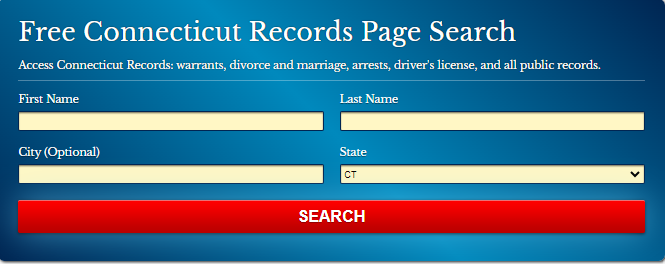
Connecticut Public Records Statutes and Rights
The foundation for all record searches in this state lies in the Connecticut General Statutes. These laws dictate what police and courts must disclose. In 1967, federal acts opened the door for transparency, and Connecticut followed with robust state-level legislation. Most documents generated by state and local agencies fall under the public domain. This means any person can request them without stating a reason.
Agencies must comply with these requests promptly. However, they can charge a fee for copying or certifying documents. While you can view data on a screen for free, obtaining a physical paper copy often costs money. The law also defines specific exceptions. You cannot view files related to juvenile offenders. The state seals these to protect minors. You also cannot view details about ongoing investigations if releasing that data would endanger a witness or spoil the case. Aside from these specific exclusions, the files remain open.
The Structure of Connecticut Record Keeping
Since no central warehouse holds every document for the entire state, you must identify the correct custodian. A custodian is the agency responsible for creating and keeping the file. For a speeding ticket, the custodian is the traffic court or the local police who issued the citation. For a felony conviction, the custodian is the Superior Court. For a birth certificate, the custodian is the Town Clerk in the city of birth.
Third-party websites collect data from these various sources and present it in one place. These private services can save time when you do not know the specific town or court involved. However, for an official, notarized document needed for a job application or visa, you must go directly to the government source. The following sections break down exactly how to contact these government offices.
Search Connecticut Criminal History and Backgrounds
A criminal history report differs from a simple arrest log. An arrest log shows that police took someone into custody. A criminal history report shows the outcome of that event, such as a conviction, dismissal, or plea deal. Employers and landlords often rely on these reports to make safety and hiring choices.
The report typically lists:
- Personal Identifiers: Name, date of birth, race, sex, and sometimes address.
- Offense Data: The specific laws broken, listed by statute number.
- Dates: When the offense happened, the arrest date, and the court date.
- Disposition: The final result, such as “Guilty,” “Not Guilty,” or “Nolle” (dropped).
- Sentencing: Fines, prison time, or probation terms.
State Police Bureau of Identification (SPBI)
The Connecticut State Police Bureau of Identification (SPBI) serves as the central hub for criminal history in the state. They maintain the master database. You can request a check on yourself or another person through them. They offer two primary types of checks.
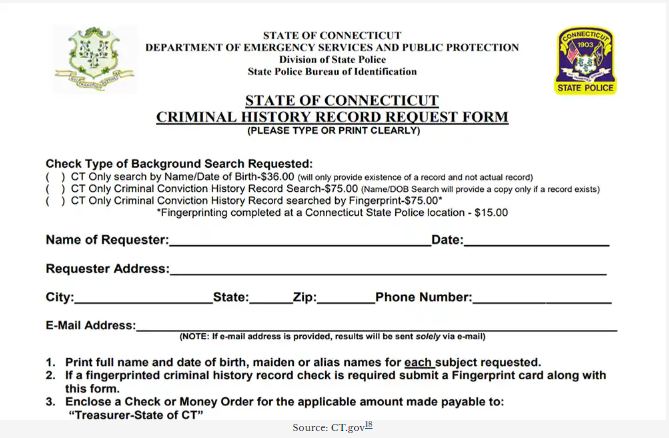
Name and Date of Birth Search
This search uses the subject’s name and birth date. It is useful for general knowledge but is not 100% positive proof of identity, as two people can share a name and birthday. The fee for this service currently stands at $36.00. This check will return a “result” or “no result” status.
Fingerprint-Based Search
This is the most accurate method. It connects the record to the person’s biometric data. Many jobs in healthcare, education, and security require this level of check. The fee is $75.00. To perform this, the subject must visit a police station or an authorized fingerprinting location to have their prints taken. The prints are then sent to SPBI for comparison against the master file.
To submit a request, you must fill out the Criminal History Record Request Form. You can mail this form along with a check or money order to the Department of Emergency Services and Public Protection in Middletown. The address is 1111 Country Club Rd, Middletown, CT 06457.
Local Police Department Records
If you only need data regarding incidents in a specific town, you can go to the local police department. Each town maintains its own records division. This is often faster than a state check but less complete. It will only show interactions that happened within that town’s borders. If the person committed a crime in the next town over, the local search will not show it.
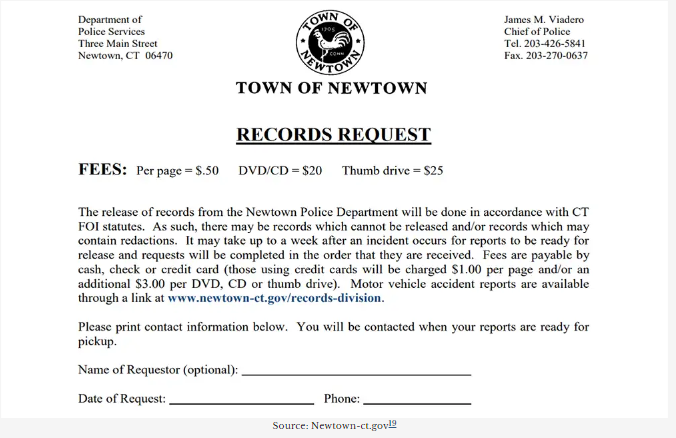
Most local departments charge around $10.00 for a record check. You must provide the name and date of birth. Some departments allow you to do this online, while others require you to walk into the lobby and fill out a paper slip. Always call the non-emergency line of the specific police department to ask about their specific hours and payment methods before you go.
Look Up Recent Arrests and Mugshots
Police generate an arrest record the moment they book a suspect. This document is distinct from a court conviction. It simply states that the state has accused the person of a crime. These logs are often available much faster than court files. You can often see who police arrested the previous night by checking the correct sources.
City and Town Arrest Logs
Because there are no county sheriff websites to check, you must look at the city level. Large cities like Hartford, New Haven, Bridgeport, and Waterbury process a high volume of arrests. These departments often publish a “Daily Arrest Log” or “Police Blotter” on their official websites. These PDF or HTML lists show the names of everyone detained in the last 24 to 72 hours.
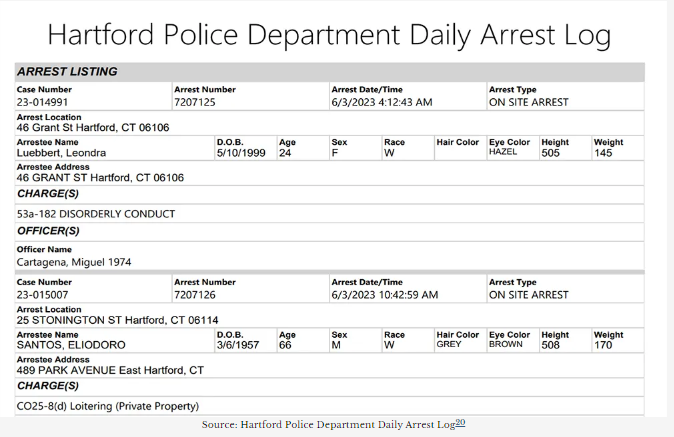
To find these, use a search engine to look for the specific town name followed by “police arrest log.” For example, “Enfield CT police arrest log.” If the town does not post it online, they likely keep a physical binder in the lobby of the police station. The public has the right to view this binder during normal business hours. It contains the basic facts: name, age, address, charges, and bail amount.
Locating Mugshots
A mugshot is the booking photograph taken when a suspect arrives at the station. Connecticut law classifies these photos as public records. However, not every police department posts them online. You are more likely to find mugshots in three specific places:
- Sex Offender Registry: The state mandates that this database include a current photo of every registered offender. This is the most consistent source for photos.
- Wanted Posters: Police departments post photos of suspects they are actively trying to find. These “Most Wanted” lists appear on department websites and social media pages.
- Media Outlets: Local newspapers and news stations often request mugshots from the police for high-profile cases and publish them in their crime sections.
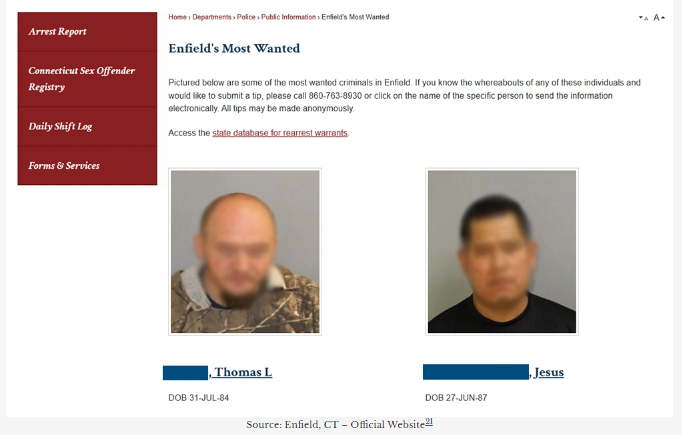
If you cannot find a photo online, you can submit a Freedom of Information request to the arresting agency. You must specify the case number or the name and date of the arrest. The agency may charge a small fee to print or email the digital file to you.
Check for Active Warrants
A warrant is a judge’s order authorizing law enforcement to take a specific action, usually to arrest someone or search a property. An active arrest warrant means the person can be taken into custody at any time. Knowing if a warrant exists is vital for legal defense and personal safety.
Judicial Branch Warrant Search
The Connecticut Judicial Branch maintains a centralized database for standard arrest warrants and “Failure to Appear” warrants. This system is free to use. It connects data from courts across the state. If a person missed a court date or violated probation, the judge issues a warrant, and it appears here.
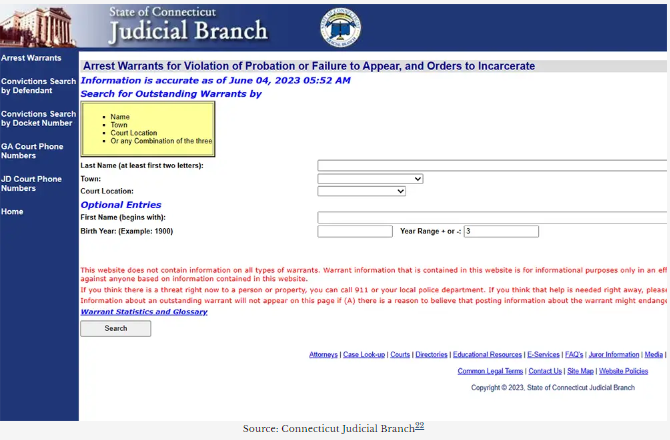
To use this tool, visit the Judicial Branch website and look for the “Arrest Warrants” section. You can search by the last name. The results will list the town where the warrant originated, the year of birth of the subject, and the specific charges. This allows you to differentiate between two people with the same name.
Not every warrant appears in this public database. Some warrants are “sealed” by the judge. This happens when police are still investigating and do not want the suspect to know they are coming. Juvenile warrants also never appear here. If you suspect a federal warrant exists, you must check with the U.S. Marshals or the federal court system, as those do not sync with the state database.
Connecticut Court Case Lookup
The court system in Connecticut is unified. This means the Superior Court handles almost all criminal, civil, and family matters. There are no separate municipal courts for different towns. This makes searching for case files easier because you only need to check one system.
Superior Court Case Search
The Judicial Branch provides an online tool to look up pending cases and past convictions. You can search for criminal, motor vehicle, civil, family, and housing cases. The system allows you to search by:
- Party Name: The name of the defendant or plaintiff.
- Docket Number: The unique ID number assigned to the case.
- Attorney Name: The lawyer representing a party.
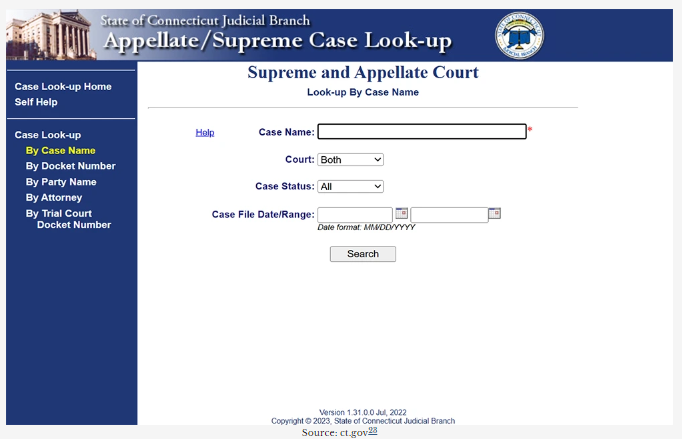
When you find a case, the summary will show the charges, the dates of upcoming hearings, and the status of the case. It will also show the disposition if the case is closed. This is where you see if a person was found guilty, acquitted, or if the charges were dismissed.
For paper copies of the full file, you must visit the Clerk’s Office at the specific courthouse where the case was heard. There is a fee of $1.00 per page for copies. If you need a certified copy, which has a raised seal and is used for official business, the fee is higher. You can find the address for the correct courthouse on the Judicial Branch website.
Locate Inmates in Connecticut Prisons
Because Connecticut has no county jails, anyone sentenced to incarceration or held on high bail goes to a facility run by the Connecticut Department of Correction (DOC). The DOC runs 13 correctional facilities. These range from high-security prisons to lower-security centers.
DOC Offender Information Search
The DOC provides a free inmate locator tool on their website. This is the only tool you need to find someone in state custody. You can search by entering the inmate’s last name and first initial. If you know their “CT DOC Number,” you can enter that for a precise match. The DOC number is a unique identifier assigned to an inmate upon their first entry into the system.
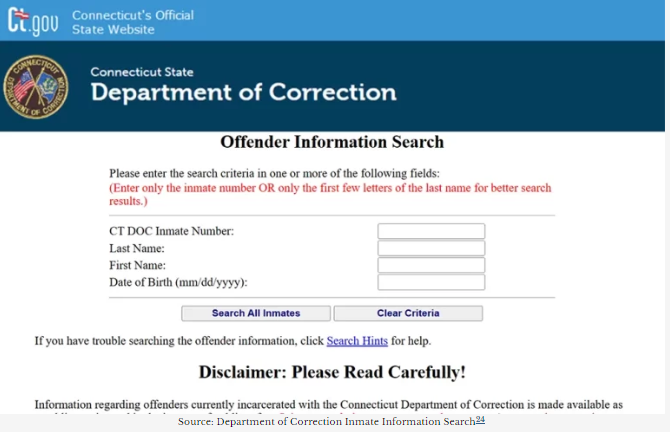
The results page provides critical data:
- Current Location: Which prison facility holds them.
- Sentencing Date: When the judge issued the sentence.
- Maximum Release Date: The latest date they will stay in prison.
- Estimated Release Date: The date they might leave if they earn credits for good behavior.
- Bond Amount: If they are pre-trial, this shows the amount needed for release.
If your search returns no results, check the spelling. If the spelling is correct, the person is likely not in state custody. They might be in a local police lockup (which does not sync with the DOC), in a federal prison, or they have already been released.
Sending Money and Visiting
Once you locate an inmate, you may want to visit or send funds. The DOC has strict rules. You must be on an approved visitor list before you go to the prison. You must fill out an application and pass a background check. For sending money, the state uses services like JPay and Western Union. You never send cash directly to the prison. You must use the inmate’s DOC number to ensure the funds go to the correct account.
Connecticut Vital Records: Birth, Death, and Marriage
Vital records are documents that prove life events. These include birth certificates, death certificates, and marriage licenses. In Connecticut, these files are managed at both the town level and the state level. The Town Clerk in the town where the event happened holds the original record. The State Vital Records Office in Hartford also holds a copy.
Connecticut is a “closed record” state for birth certificates. This means you cannot just ask for anyone’s birth certificate. You must be the person named on the certificate, their parent, their child, or their spouse. You must prove your relation. Death and marriage certificates are generally more accessible, but certified copies usually require proof of identity.
How to Request a Certificate
You have three main options to get these documents:
- Town Clerk: Go to the town hall where the birth, death, or marriage occurred. This is often the fastest way. You fill out a request form, show your ID, and pay the fee.
- State Vital Records Office: You can mail a request to the state office in Hartford. This takes longer, often several weeks to process.
- Online Services: The state partners with VitalChek, a private company, to handle online orders. This is the only approved online method. It costs more due to processing fees, but it saves you a trip.
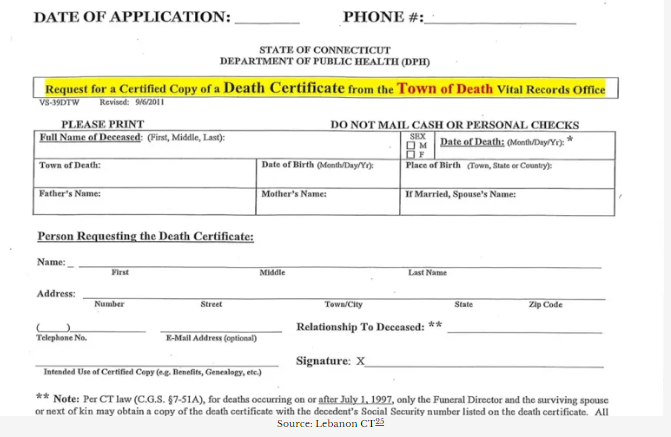
The standard fee for a certified copy of a birth certificate is $30.00. Marriage and death certificates typically cost $20.00. Always check the current fee schedule on the Department of Public Health website before sending a check.
Connecticut Clean Slate Law and Record Erasure
Connecticut recently enacted the “Clean Slate” law. This legislation automatically erases records for certain crimes after a specific period of time. If a record is erased, it is deemed to have never occurred legally. You can swear under oath that you were never arrested for that crime. The state removes these files from public databases.
This law applies to most misdemeanors if you have a clean record for seven years following your conviction. It also applies to certain low-level felonies if you remain crime-free for ten years. You do not need to file a petition for this; the system does it automatically. However, for more serious crimes, you must apply for a Pardon through the Board of Pardons and Paroles. A pardon is a formal forgiveness that clears your record.
Frequently Asked Questions
People often look for clear answers about access to arrest photos, public records, and online sources in Connecticut. This section addresses common questions related to mugshot availability, official state resources, and the limits of public databases, helping readers know where information may or may not be found before checking specific law enforcement websites.
Is there a central website to view all Connecticut mugshots?
No single government website hosts every mugshot for the entire state. The closest option is the Connecticut Sex Offender Registry, which contains photos of all registered offenders. For other arrests, you must check the individual websites of the police department that made the arrest. Third-party sites often aggregate these photos, but they are not official government sources and may contain outdated data.
How do I find out if someone is in custody in a specific town?
To find someone held in a town lockup, call the local police department’s non-emergency number. Town jails are temporary holding cells. Detainees usually stay there for less than 48 hours before seeing a judge or posting bail. If they cannot post bail, the state transfers them to a Department of Correction facility. Once transferred, they will appear in the statewide DOC inmate search tool.
Can I look up juvenile criminal records in Connecticut?
No. Juvenile records are strictly confidential in Connecticut. The public cannot view them. Only the juvenile, their parents or guardians, and their attorneys can access these files. This protection remains in place to help young people rehabilitate without the stigma of a public record. In rare cases where a juvenile is tried as an adult for a severe felony, those specific court proceedings may become public.
What is the fee to get a background check on myself?
If you go through the Connecticut State Police Bureau of Identification (SPBI), a name-based search costs $36.00. A fingerprint-based search, which is more thorough and often required for employment, costs $75.00 plus a $15.00 fingerprinting fee. Local police departments charge less, typically around $10.00 to $20.00, but their checks only cover arrests within that specific town.
How often is the Connecticut judicial case lookup updated?
The Connecticut Judicial Branch website updates its case data every night. If a court hearing happens today, the results and new scheduling dates usually appear on the website by the next morning. However, there can be a delay of a few days for new case filings to be entered into the system by the court clerks. Always check the “last updated” date on the search screen.
Does a “Nolle” show up on my background check?
A “Nolle” (nolle prosequi) means the prosecutor chose to drop the charges. In Connecticut, a nolle remains on your record for 13 months. During this time, it is visible to law enforcement and the courts. After 13 months, if you have not had any new legal trouble, the nolle is automatically erased. Once erased, it should not appear on a standard public background check.
Who can access divorce records in Connecticut?
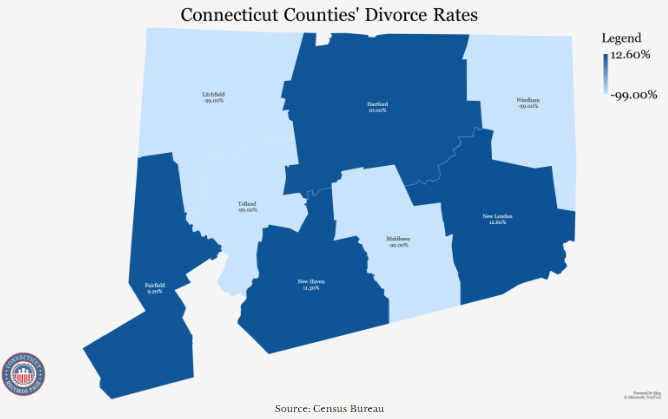
Divorce records are considered court files, not vital records. This means they are generally open to the public unless a judge has sealed them. You can view the basic case details online through the Superior Court Case Look-up by searching for family cases. To get a copy of the actual divorce decree, you must visit the Superior Court Clerk’s office where the divorce was granted. You do not need to be a party to the divorce to request a copy, but you will have to pay a copying fee.
Official Agency Contact Data
Connecticut State Police Bureau of Identification (SPBI)
1111 Country Club Road
Middletown, CT 06457
Phone: (860) 685-8480
Connecticut Department of Correction (DOC)
24 Wolcott Hill Road
Wethersfield, CT 06109
Phone: (860) 692-7780
Connecticut Judicial Branch
Various locations statewide. Check the official Judicial Branch website for specific court addresses.
Phone: (860) 756-7800 (Hartford District)